Related Articles
What is Helicopter Parenting and How Does it Affect Kids?

The most fundamental thing about helicopter parenting is that it comes from a loving place. All parents want to shield their child from hurt, disappointment, or error. This is normal. Who would want their child to suffer when they could help them? However, there's a point at which 'help' becomes 'hove.'
If you constantly check up on your child, intervene when problems arise, or hover over them, rest assured that you're not the only one. A Pew Research Center survey found that 75 percent of parents feel that parenting today is more difficult than it was 20 years ago. Correspondingly, findings from the American Psychological Association associated over-involvement in children and adolescents' lives with higher levels of anxiety, lower self-reliance, and independence.
The balance between providing a safe haven and ensuring development through problem-solving is quite delicate.
Children need to be guarded; nevertheless, they need room to fail, make choices, and feel pride in themselves. In the following lines, we define helicopter parenting, discuss its effects, highlight the differences between helicopter and authoritative parenting, explain how over-parenting affects children's independence, and offer tangible ways to promote autonomy without compromising care.
What is Helicopter Parenting?
Helicopter parenting is the excessive involvement of parents in a child's life. These parents take on a protective role, constantly overseeing and often intervening in their child’s education, relationships, decisions, activities, and future choices. This means that rather than supporting the child as they learn, the parents have stepped in to make it happen for them.
Examples of this include:
- Completing tasks that the child could easily accomplish alone
- Fighting the child’s battles
- Monitoring assignments
- Micromanaging schedules
- Making decisions on the child's behalf.
Parents may believe they are acting in their child's best interest; however, this constant involvement can have unintended negative consequences on a child’s ability to adapt to life.
Why do Parents Helicopter Parent?
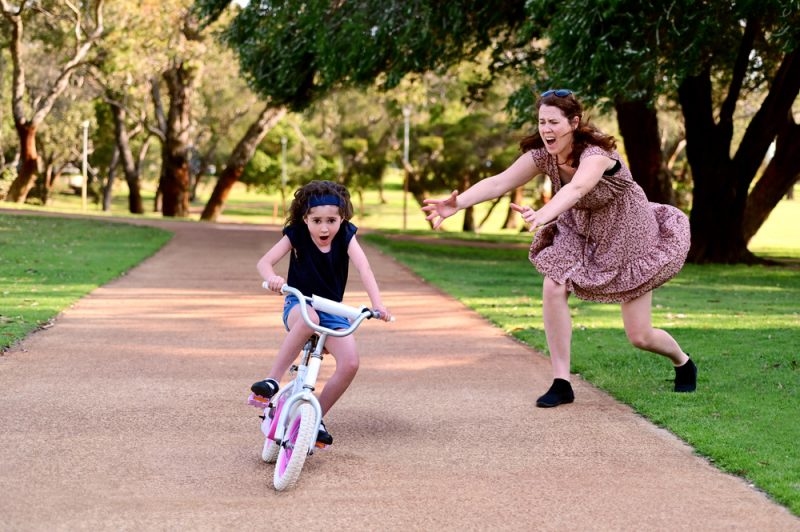
Parenting can feel overwhelming at times. Numerous things cause parents to be helicopter parents. There is fear, societal pressure, competition, and technology/information that all play a part in making parents overprotective and less confident. Here are a few common reasons parents become overprotective:
1. Fear of failure:
Parents worry that their child will fail and that failure will have long-term detrimental effects. These are the parents who intervene before anything actually happens.
2. Protective Nature:
Parents seem to want to be the "protectors." This role may be taken to extremes, keeping children from facing challenges in their lives that would be beneficial to learn to overcome.
3. Social Expectations
Society puts pressure on parents to be perfect. Parenting blogs, articles, books, and social media make some parents believe they are responsible for guiding their child’s development through every aspect.
Try This: Is Permissive Parenting Helping or Hurting Children?
Helicopter Parenting Effects on Children
When parents are excessively involved in their children's lives, these children lack opportunities to learn and experience the world. Like:
- Reduced independence
- Confidence
- Higher levels of anxiety are common side effects of helicopter parenting.
The constant hovering takes away a child's chance to become self-sufficient, resilient, a problem-solver, and confident in their ability to adapt to the world around them.
When parents always swoop in to fix everything, the child begins to develop higher levels of anxiety. As such, he/she feels his/her parents cannot handle his/her situation and may face issues in all relationships as he/she grows up, both professionally and personally.
Are You Helicopter Parenting?
Some common symptoms of helicopter parenting include:
- Constant intervention and decision-making
- Communication primarily from the parent to the child
- Feeling anxious when the child is facing challenges
- Completing your child’s tasks for them
- Trying to control your child’s decisions even after he/she has passed childhood
Understanding how these symptoms manifest and how they impact your child can help you determine if you may be helicopter parenting and whether you need to adjust your approach.
Helicopter Vs. Authoritative Parenting Differences
Parenting styles vary; there are no "perfect" or "worst" parenting styles. However, most parenting authorities consider authoritative parenting the most effective. The key differences between authoritative and helicopter parenting are how parents approach the child's independence:
Helicopter Parenting
It is when parents micromanage their child's life and offer assistance before even letting their children attempt something themselves. Helicopter parents also make sure their children are protected from failure and danger at all costs. The goal is to keep kids from failure.
Authoritative Parenting
It is described as the golden mean between being warm and caring and being authoritative, with clear boundaries. These parents value independence and responsibility, support their child, and provide encouragement and guidance, but they do not take over to the point where their children become completely dependent on them.
Children who are raised in authoritative homes generally have higher self-esteem, become self-reliant, are more responsible, and possess strong social skills and coping methods that make them well-adjusted children and adults.
How Does Over-Parenting Affect Children's Independence?
Over-parenting influences a child's independence by preventing growth and hindering the development of essential life skills. Without the ability to problem-solve, children develop lower confidence and will always be dependent on external support. The impact is that these children have less:
- Critical thinking skills
- Lower self-worth
- Greater anxiety when faced with difficulties
- Unable to make effective decisions.
This lack of independent thought and ability can impact how the child forms relationships with others.
How to Stop Being an Overprotective Parent?
If you can see helicopter parenting in your own behavior, know that change is possible. Children gain important skills and independence by experiencing failure and having the opportunity to navigate difficulties independently.
1. Give tasks according to his/her age so he/she can perform without assistance. This fosters confidence, and he/she will learn responsibility for the assigned tasks.
2. Let the natural consequences play out: Let your child learn from his/her actions whenever the consequence is safe.
3. Assist in the process of problem solving, not provide the answer: Let your child solve his/her own problem instead of solving it for him/her.
4. Concentrate on learning and growing rather than on perfection: this builds his/her resilience.
Conclusion
Parenting a child involves a delicate balance of protecting them and helping them develop independence. Helicopter parenting is rooted in love and good intentions; however, the long-term effects may yield the opposite of what parents hope for. The key to raising confident and capable children lies in providing the right support while encouraging them to tackle challenges and make their own decisions. For more parenting guidance, resources, and tips, consider exploring Parentalmastery.com for further support.
Frequently Asked Questions
Is There an Age Limit to Helicopter Parenting?
No. Children who are college-aged or adults often continue to benefit from their parents' support. However, there is a threshold to how involved a parent should be with their child at any age, even when they are adults. Excessive helicopter parenting of a young adult will also contribute to the adult child's inability to achieve their full independence.
Does Helicopter Parenting Influence How Children Do in School?
Parental involvement in school performance is complicated: whereas some children who receive a lot of parental help in school do very well academically at first, overall success depends on developing intrinsic motivation and taking responsibility for schoolwork. It has even been said that over-parenting makes it harder for a student to succeed in college and beyond, as it does not foster problem-solving and independent work.
Can Parenting Styles Be Changed After the Child Has Already Reached a Certain Age?
Parenting styles can be changed over time. Parents will always care for their child, so they need to learn and adjust. Small changes can go a long way for a child's confidence. Parenting needs constant learning and alteration to raise a good kid.
This content was created by AI


