Related Articles
Parenting Tips To Help Kids With Autism Lead A Great Life

Key Takeaways
- No two autistic children are the same.
- Predictable routines can help make life less overwhelming.
- The mode of communication support must be appropriate for the child.
- Supporting our children early with specific interventions can support the children to build skills such as communication, learning, and daily living skills.
- Offer children an opportunity to practice age-appropriate tasks.
- Children will thrive and participate in a caring environment, classroom, and professional team.
Autism is a neurodevelopmental difference that affects communication, social interaction, learning, behavior, and sensory processing. As no two children are the same and each autistic child has different skills and support needs, what a child learns and develops at different ages will differ. Rather than getting every child on the same track, you can help your child to communicate, learn, connect, stay safe, and be independent.
Exploring what your child's needs are is a great starting point. Do they need support with a lot of communication and day-to-day tasks, or just support in social scenarios, sensory needs, or at school? A little support can help children feel understood and confident.
Best Parenting Tips To Help Kids With Autism
These ways may help parents to foster a sensitive environment for kids with autism while at the same time respecting each child's individuality.
1. Learn About Your Child's Individual Needs
Every autistic child is unique and has different needs. Observe the way your child communicates, what engages and interests him or her, his or her individual strengths and sensory preferences, and what triggers frustration.
Identify strengths as well as difficulties. Children's areas of interest can be a springboard for learning, communication, play, and engagement.
Parents can also provide helpful observations to the child's pediatrician, therapists, and teachers to help provide appropriate support and development.
2. Create Predictable Routines
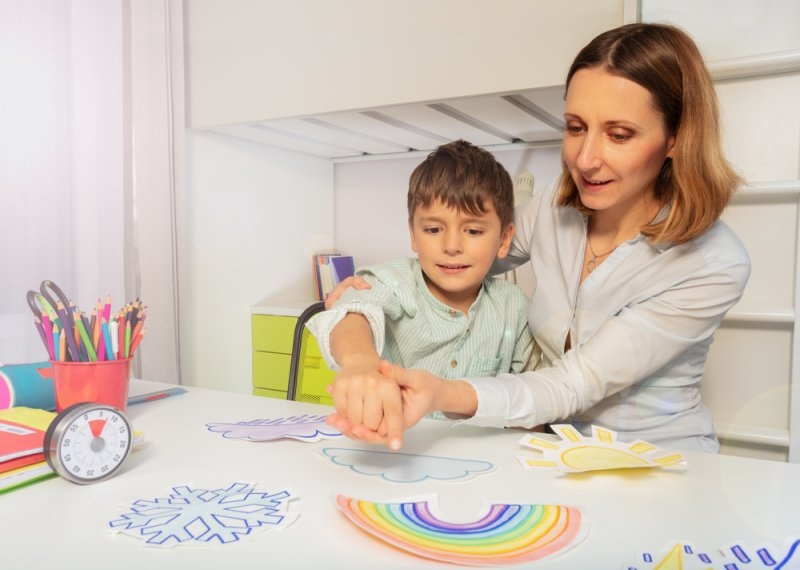
Knowing what is coming next can be helpful for many children. When a schedule is used regularly, things like getting dressed, eating, going to school, and bedtime can be more predictable.
Pictures, written words, or simple drawings of a daily schedule or routine can help a child manage daily activities. When a schedule or routine may change, give the child a heads-up when you can.
3. Support Communication
Communication can vary from one autistic child to another. For example, a child may not use spoken language but might use gestures, signs, pictures, drawing, or writing to make their needs and wants known.
Do not assume that a child with limited speech has limited understanding. The aim should be for them to communicate their needs, choices, feelings, and thoughts in a way that is meaningful to them. The speech-language pathologist can help families find appropriate communication techniques.
4. Pay Attention to Sensory Needs
Some children with autism are hypersensitive to sounds, light, textures, smells, movement, or busy places. Others crave sensation.
We can see which situations are overwhelming and make appropriate accommodations such as less background noise, a quiet space, comfortable clothing, or reminding the child about what to expect in the environment.
A sensory occupational therapist or other specialist can assist families when necessary.
5. Encourage Independence
Kids can practice establishing confidence with day-to-day work. There are skills that a parent can gradually work on: brushing teeth, getting dressed, clean-up games, simple cooking, and packing school bags.
Use more steps and break them into smaller chunks. Give plenty of time for practice using visual instructions and demonstrations.
The aim is not to move straight into complete independence. Gradually giving children a little more independence in simple everyday tasks helps to make them more confident and active members of the family.
6. Encourage Interests and Play
Interests can also be a useful way to make a connection and to learn. Parents can participate in their child's interests as an alternative to redirection.
Children who like animals may be able to practice languages by at least naming animals, reading animal books, counting figures, or creating stories.
There may also be chances to develop communication skills, take turns, problem-solve, and socialize.
7. Work With Your Child's School
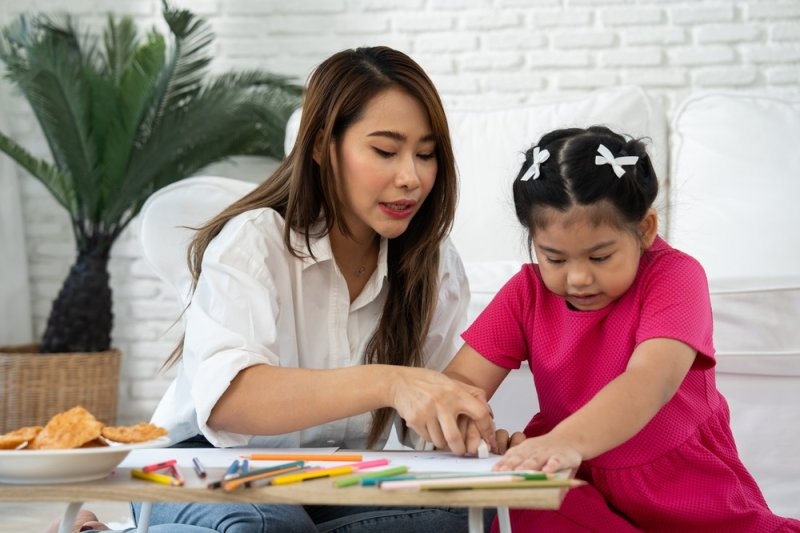
Join forces with teachers and other caregivers to discover how a child learns and engages with classroom activities. Share information about a child's communication style, routines, sensory considerations, skills, and general preferences.
What areas can the educational support help with? Educational support can help with communication, learning, participation, sensory, and independence skills.
Ongoing dialogue between parents and teachers can help to ensure ongoing support and identify any changes in needs.
8. Consider Professional Support
Assistance from a professional may be necessary if a child is having problems with communication, development, learning, behavior, sleep, feeding, or the performance of everyday activities.
The support team might comprise a pediatrician, developmental specialist, speech-language pathologist, occupational therapist, psychologist, educator, and other professionals, depending on the child's needs.
Parents are encouraged to ask questions of a health care professional rather than delay until symptoms get worse. The American Academy of Pediatrics recommends developmental monitoring and autism-specific screening at 18 and 24 months, and children with developmental concerns may also require assessment at other times.
9. Make Safety a Priority
Some children on the autism spectrum are at risk of not understanding danger, not being able to communicate when they are lost, or not avoiding dangerous situations. Parents need to consider safety issues according to the child's ability and style of behavior.
Repeat safety instructions, and be cautious at doors, on roads, near water, and in other dangerous areas. If you think your child may wander or leave a safe area, talk to his or her doctors and support team about strategies to prevent this.
10. Take Care Of Your Own Well-Being
Parenting can be exhausting when your child needs more help. Parents can share the load, seek support from family members, find support from other parents, and take some time to rest.
Do not compare one child with another. Autism is not a process that happens the same way in every child, and development can be uneven. Looking after yourself will give you the patience, availability, and listening ear for your child.
Conclusion
Caring for kids with autism? Time for Mother to care. Remember, you are the most emotionally intense person when caring for a child with ASD, and that intensity will enable you to be the perfect parent for the special needs child you are raising. Since your ASD kid can't "grow out of" the condition, there are a few therapies available to guide him towards fulfilling his potential.
Your child's free government help, behavioral treatment at home, and school-based treatment all serve to educate, help, and support your child to succeed regardless of his or her specific needs. We hope that you use these parenting tips from Parentalmastery.com to have a happy and successful life with your child with autism.
Frequently Asked Questions
How can I help my child with autism at home?
You can help an autistic child by establishing routines, using appropriate means of communication, supporting sensory needs, encouraging independence and interests, and facilitating play and learning. Seek professional help if needed.
Can autistic children be independent?
Some can become reasonably independent, but others will require significant support. You can encourage independence by teaching practical skills gradually, breaking down tasks into small steps and allowing the child time to practice.
How do I communicate with my autistic child?
It depends on the particular child. Use cues, gestures, speech, sign language, pictures, writing things down, or use AAC. There are various ways you can find out, which helps your child to communicate what they want to say.
When should I seek help for my autistic child?
Talk to your pediatrician or other qualified professional about any concerns that you may have. Children may require help for communication skills, learning, behaviors, sleep issues, feeding, or using their senses and daily routines.
How can I help my autistic child live a happy life?
You should help them to focus on their strengths and what they can achieve, as well as safety and comfort, learning and independence, and their communication and relationships. As a parent, you should ensure that you are not comparing your child with others, and a supportive environment will help them participate in everyday activities.
This content was created by AI


