Related Articles
Best Fun Math Games for Kids To Improve Their Math Skills

Key Points
- Fun games make practicing math feel easy—no stress, just learning in disguise.
- Card games and puzzles sharpen both calculation and logic skills while you play.
- Board games don’t just boost math skills; they also teach kids how to work together and play fair.
- And when kids are running around outside, they’re still working on everything from counting and keeping track of time to thinking on their feet.
- Creative activities are also important for strengthening the thinking skills that help children understand math.
When your child was in elementary school, math probably seemed like the most challenging subject. While kids might have found it challenging, they probably also had fun learning it. As a parent and tutor, you probably know how important math is for your child’s development and future.
Fortunately, there are many ways to help your child strengthen their math skills so that this troublesome subject is not so troubling anymore.
Fun Math Games For Kids To Improve Their Skills
Here are great fun math games for kids to play with your children and improve their math skills:
1. Card Games
Card games with your kids can turn math into something they actually enjoy. Just grab a deck and jot down problems like “7 + 3” or “4 x 5” on each card. Every time your child gets an answer right, they score points. The game moves quickly and keeps things lively, and the best part is your kid’s doing math without really thinking about it.
You’re not limited to math, either. The same kind of games can help with science, grammar, or even building vocabulary. And if you find the right card deck, you can sneak in some reading practice, too.
2. Puzzles
Children learn best when having fun, so puzzles can be a great way to help your child improve their maths skills while simultaneously having fun. A word search puzzle that includes addition, subtraction, and multiplication, and a number puzzle where your child will have to place numbers in order from 1 to 10, or even a jigsaw puzzle with numbers or mathematical symbols on the pieces. Make simple to complex equations and ask children to solve them.
Puzzles not only improve math skills but also improve critical thinking and problem-solving abilities because they can be tailored to their strengths and weaknesses.
3. Board Games
If you are looking for fun games to play with your child to improve their math skills, board games may be an excellent option. Games like Monopoly and business are good examples of board games. Some other fun games are Connect Four, Pick Up Sticks, or even a game of Scrabble. In each of these games, there are likely to be many mathematical questions your child will need to answer.
For example, when playing a game of Scrabble, many words contain numbers, such as ‘nine’ and ‘seventeen,’ which the child will need to add to learn the final score or to figure out who is on the winning side.
When playing Connect Four, your child must count the number of tiles they need to place, one tile in each column. Board games are excellent ways to help your child learn because they are engaging and interactive and provide them with the social aspect they need to improve their math skills. Moreover, many board games can be played with a group of people, which means your child will be able to engage with others, too.
4. Hide and Seek
Children love to play hide and seek, especially younger children. It turns out that this simple outdoor game can help your child improve their math skills, too. You can ask the child to start the game by counting from one to fifty, while you and your partner can hide; then the child has to find you and everyone involved in the game (depending on how many people are playing; the greater the number of people, the more fun).
This game can be used to help your child improve their math skills because it will help them to practice their counting, their visualization skills (they will have to picture where their items are), and their logical reasoning skills. What’s more? This game can be adapted for different ages and skill levels. For example, you can make it easier for younger kids by having them count by fives instead of tens, or for older kids, by having them count by fives and tens simultaneously.
5. Running Games
If your child likes running, you might want to consider using running games to help them improve their math skills. Moreover, running games are great because they require little to no equipment, which means you can do them almost anywhere.
You can use a time challenge where your child has to run for a certain time. Give all the children watches to wear and start a race. Ask them to check the starting time. Wait till the children reach the finishing point. Let them decide who came first and who didn’t, depending on the time when each one finished the race.
It’s also a great way to improve their physical fitness and help them learn timing and counting minutes and seconds to figure out who’s winning.
6. Math Fact Bingo
First, make bingo cards with answers to various multiplication tables. Second, distribute them to pupils and ensure they have a separate page for computations. Finally, instead of using integers, use equations like 87. They can cross off the number if it’s on their cards after establishing the product is 56.
7. Simon Says
Playing this variation of Simon Says will appeal to kinesthetic learners while improving their comprehension of basic geometry.
All of your orders, according to Simon, should compel pupils to demonstrate angles and forms by moving their arms. Ask them to draw angles of varying degrees and parallel and perpendicular lines. Increase the pace of your orders—and modify whether they come from Simon or not—until just one student survives and is declared the winner.
8. Around The Block
Use the game. Around the Block as a hands-on mental math workout by bringing a ball and a partner around the block. Develop a set of relevant examination questions first. The second step is to have the class form a circle. In the end, you’ll want to hand the ball to a kid and then read aloud a question from your list.
The first student to get the ball must answer the question before receiving it again. The game continues around the circle in a clockwise direction. In case of an incorrect response, the student may transfer the ball to another student for the following question. A student who gets the question right gets to pick the next challenger.
9. Bouncing Sums
If the child understands the basics of addition, subtraction, multiplication, and division, you can challenge them further by bouncing sums. To get started, write numbers, decimals, or fractions on a beach ball using labels and a marker. Give the ball to one student, who will read aloud the label in contact with one of their thumbs and then pass the ball to the next student.
The game continues, and each student must read the number on the label and add it to—or multiply it by—the total or product indicated by the preceding student. What is the challenge? Get the greatest possible score in the shortest amount of time.
10. Math Baseball
Create two teams and play a game of mathematical baseball. The first team bats and chooses questions with values of one, two, or three bases to score runs. You will “pitch” questions, and their complexity will correspond to the number of bases they’re worth. If the team batting gets a question wrong, the other team can get an out by answering correctly.
You should change sides after three outs. Let the game continue until one team reaches ten runs. When participating in this task, you will be able to direct the questions the youngster will be asked. As the youngster responds successfully, raise the bar.
Other Activities to Help Your Kid’s Math Skills
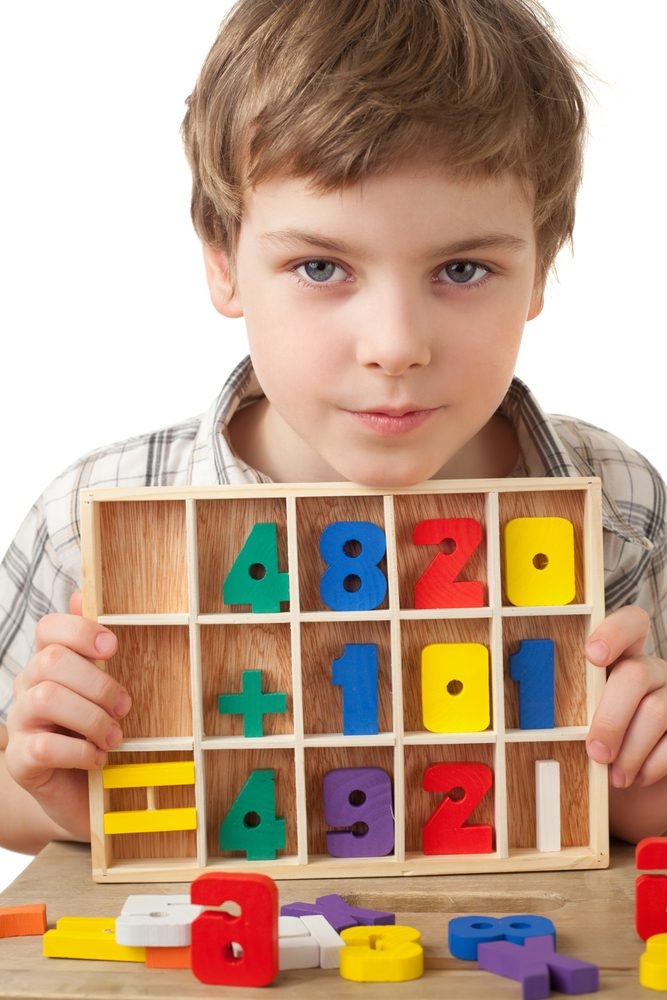
You can also help your child strengthen their mathematical skills by doing activities that encourage them to use their brains and think creatively. For example, drawing, painting, or making up stories and plays. These activities will help improve your child’s thinking skills, which can help them understand math concepts better.
Conclusion
As you can see, there are more ways to help your kid with their math homework than one. Use these fun math games for kids from ParentalMastery.com along with your child's homework as a way to inspire your child to get excited about math and feel comfortable when they are in math class.
Frequently Asked Questions
What are some fun games that boost kids’ math skills?
There are a bunch. Card games, puzzles, board games, Math Fact Bingo, Simon Says, Around the Block, Bouncing Sums, and Math Baseball—you get the idea. Kids practice lots of math skills without even realizing it, just by playing. It keeps learning lively and not so much like “schoolwork.”
How do games help kids learn math?
Games pull kids into the action. They work with numbers, shapes, and time—they solve problems on the fly instead of filling out another worksheet. Plus, games let them practice the same skills over and over, but in ways that don’t feel boring or repetitive.
What math can kids learn through games?
Really, it depends on what you play. Addition, subtraction, multiplication, division, counting, fractions, decimals, geometry, logic—the list goes on. Some games are great for timing and strategy, too. Parents can tweak the rules or level of challenge so it fits their kid just right.
Are outdoor games good for learning math?
Yes. Outdoor games are good for learning math. Tag, hide-and-seek, races, and scavenger hunts get kids working on counting, timing, visualizing, and problem-solving—all while they’re running around and not stuck at a desk.
Can parents help kids sharpen math skills at home?
Absolutely. You don’t have to be a math whiz. Playing games, doing puzzles, and even simple everyday activities turn into math practice if you look for opportunities. With these moments, kids pick up skills without it ever feeling forced.
This content was created by AI